
"South America"
5000 article(s) found

World-famous individual coffee beans and their origin China Coffee net China Coffee Trading Network Latin America
Introduction] Latin American coffee beans (Central and South America) middot; Brazil: Santos (Santos), Bahia (Bahia), Syrador (Cerrado), Mojiana (Mogiana) middot; Mexico: Coatepec, Huatusco, Orezaba (Orizab Latin American coffee beans (Central and South America) Brazil

Introduction to the price of manor flavor description treatment method in Peruvian coffee production area
In 1542, the Spanish royal family set up the Government House in Lima and established the Governor's District of Peru, which became the center of Spanish colonial rule in South America. At that time, Peruvian commerce was prosperous, merchants controlled most of South America's import and export trade, and the precious metals and other goods looted by the Spaniards from South America were shipped out of Peru. The colonists encroached on land in Peru, forced the Mita system, and forced the Indians to

A brief introduction to the cultivation of high-quality boutique coffee beans in Santa Rita Manor, geographical location, climate and altitude
Growing coffee also requires daylight and proper shade, which is most suitable for planting on fertile soil or volcanic ash soil. Therefore, the origin of coffee is widely distributed in South America, Central America, the West Indies, Asia, Africa, Arabia, the South Pacific and Oceania. Such as Ethiopia and Tanzania in Africa, Brazil, Colombia, Jamaica, Guatemala and Mexico in Central and South America.

Coffee producing area and coffee flavor introduction what kind of coffee producing area produces better coffee?
Coffee comes from coffee beans, which are harvested and processed from the fruit of trees. Coffee trees grow at the center of the equator, between latitudes of 25 degrees south and north, and are called the homes of tropical or subtropical countries called coffee belts. At present, there are about 60 coffee-producing countries. Coffee is produced in South America, Central America, the West Indies, Asia, Africa, Arabia, the South Pacific and

Introduction of Coffee Bean producing areas-- Costa Rican Fine Coffee from South America
Well-known representative coffee: Tarrazu Costa Rica, like other Central American countries, widely grows Arabica coffee. Its coffee is mainly grown in two high areas, one is the high area near the capital San Jose, and the other is the Tarrazu mountains southeast of San Jose. Because coffee is grown in Costa Rica at high altitudes.

Stories and legends of Antigua Coffee beans in Guatemala Coffee Culture of Central and South America
Palate: rich aroma, sour grape tropical fruit, full and mellow ta's unique charm explains the sweetness of Guatemala, ta will make you feel comfortable with all the coffee beans, ta, will make you completely crazy about ta and fascinated by ta, which is unique to Antigua.
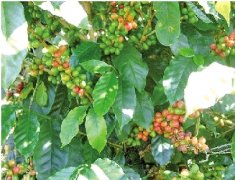
High quality imported santa rita from Santa Rita, Colombia, Central and South America
Colombia Santa Rita Special Reserve country: Colombia: Antioquia: altitude: 1600-2100 m treatment: washed varieties: Kaduai, Kaddura Manor: Santa Rita flavor: sugar, clean, medium alcohol thickness
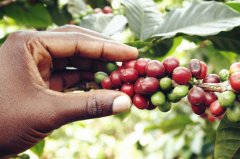
Guatemala Coffee production area of Central and South America
Full-bodied and fruity, with aromas of spices and tobacco. Lots of alively fruity kind of acidity distinctive aroma, spicy / smokey flavor good body. Antigua is bordered by Mexico in the north. Like Tarasu in Costa Rica, located in Antigua, southwest of Guatemala, coffee is grown on the slopes of the hinterland of the volcano.

Panamanian Kasha flavor
Panama is located on the Panamanian isthmus in Central America, bounded by Colombia to the east, the Pacific Ocean to the south, Costa Rica to the west and the Caribbean Sea to the north. The territory is S-shaped to connect North and South America, and the Panama Canal connects the Atlantic and Pacific oceans from north to south. It is known as the bridge of the world. [5] Panama has a land area of 75517 square kilometers, a land length of 772km and a width of 60 to 1.

Indonesian coffee Asian coffee has a higher alcohol thickness than Central and South America and African beans.
The mellow thickness of Asian coffee is higher than that of Central and South American and African beans, but its sour taste is lower, with slightly sunken wood, herb, spice and earthy flavor, and its low and stuffy aroma is higher than that of rising sour flavor. At the end of the 17th century, the Dutch East India Company transplanted Indian Arabica trees (Tibica) to Jakarta, Java. Due to the favorable climate and soil, Arabica quickly spread to Sumatra in Java.

Introduction to Coffee Bean producing areas-- characteristics of Mexican Fine Coffee in South America and Mexico
Well-known representative coffee: Mexico (Mexico) Malaggippe Mexico is close to the United States to the north. Its coffee production ranks fourth in the world, mainly produced in the southeast adjacent to the Vivette Nango highlands of Guatemala. Brother Mo, about 70% of his coffee is exported directly to the United States, which is washed and divided into three grades according to their height. Generally speaking, the evaluation of Mexican coffee is moderate.

Coffee flavor in the Galapagos Islands of Ecuador, a coffee-producing region of South America.
Ecuador faces the Pacific Ocean, and near the equator, about 900km off its west coast, near the equator at 90 degrees west longitude, there is also a dependency of the Galapagos Islands (Galapagos Island), also known as Cologne, which produces the famous Galapagos coffee. In order to protect the natural ecology, the Ecuadorian government has designated the archipelago as a national park and banned the use of chemical fertilizers, pesticides and other chemical agents.
Coffee bean producing areas-South America-Brazil (Brazil)
Well-known representative coffee: Santos Brazil is the world's largest coffee producer, with the first total output in the world, accounting for about 1% of the world's total output, mainly in the central and southern provinces. Brazil is suitable for growing coffee, the terrain is relatively flat, most coffee gardens are less than 1200 meters above sea level, and there is no shade from big trees, because the raw and ripe berries are harvested at the same time, so it is not a fine product.

Interpretation of the flavor characteristics of individual coffee beans from all over the world
Coffee trees grow in tropical or subtropical agricultural gardens centered around the equator and called coffee belts. In addition, growing coffee also requires daylight and proper shade, which is most suitable for planting on fertile soil or volcanic ash soil. Therefore, the origin of coffee is widely distributed in South America, Central America, the West Indies, Asia, Africa, Arabia, the South Pacific and Oceania. If not
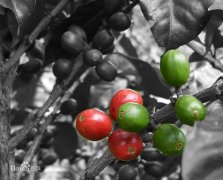
Guatemalan boutique coffee characteristics of Central and South America
Guatemala (Guatemala) aroma 3.5 minutes brightness 4.5 minutes mellow 3.5 minutes flavor 4.5 minutes aftertaste 4.5 points suitable for baking: Light/Medial/City shallow roasting, city degree can best show the characteristics of Guatemalan coffee, too deep will reduce the fruit flavor, if you like the smoky flavor, you can bake close to the second explosion, but still do not enter the second explosion as the principle. By

Coffee bean producing areas-South America-Brazil (Brazil)
Well-known representative coffee: Santos Brazil is the world's largest coffee producer, with the first total output in the world, accounting for about 1% of the world's total output, mainly in the central and southern provinces. Brazil is suitable for growing coffee, the terrain is relatively flat, most coffee gardens are less than 1200 meters above sea level, and there is no shade from big trees, because the raw and ripe berries are harvested at the same time, so it is not a fine product.

Introduction to the mild taste of high-quality coffee beans in Peruvian coffee producing areas
In 1542, the Spanish royal family set up the Government House in Lima and established the Governor's District of Peru, which became the center of Spanish colonial rule in South America. At that time, Peruvian commerce was prosperous, merchants controlled most of South America's import and export trade, and the precious metals and other goods looted by the Spaniards from South America were shipped out of Peru. The colonists encroached on land in Peru, forced the Mita system, and forced the Indians to

What Coffee enters America and what Coffee enters China
Coffee entered America in 1668, and coffee became popular in South America as a fashion drink, followed by coffee shops in New York, Philadelphia, Boston and other North American cities. The Boston Tea Party case of 1773 was planned in a coffee shop called Green Dragon. Today, both the New York Stock Exchange and the Bank of New York in the famous Wall Street financial district began in coffee shops.
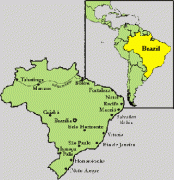
A brief introduction to the main coffee producing areas in South America and their well-known representative coffee flavor characteristics
For the exchange of professional baristas, please follow the coffee workshop (Wechat official account cafe_style) Brazil (Brazil) well-known representative coffee: Santos Brazil is the world's largest coffee producer, with the first total output in the world, accounting for about 1 gambit 3 of the global total output, mainly produced in the central and southern provinces. Brazil is a suitable area for growing coffee, with flat terrain and coffee plantations.